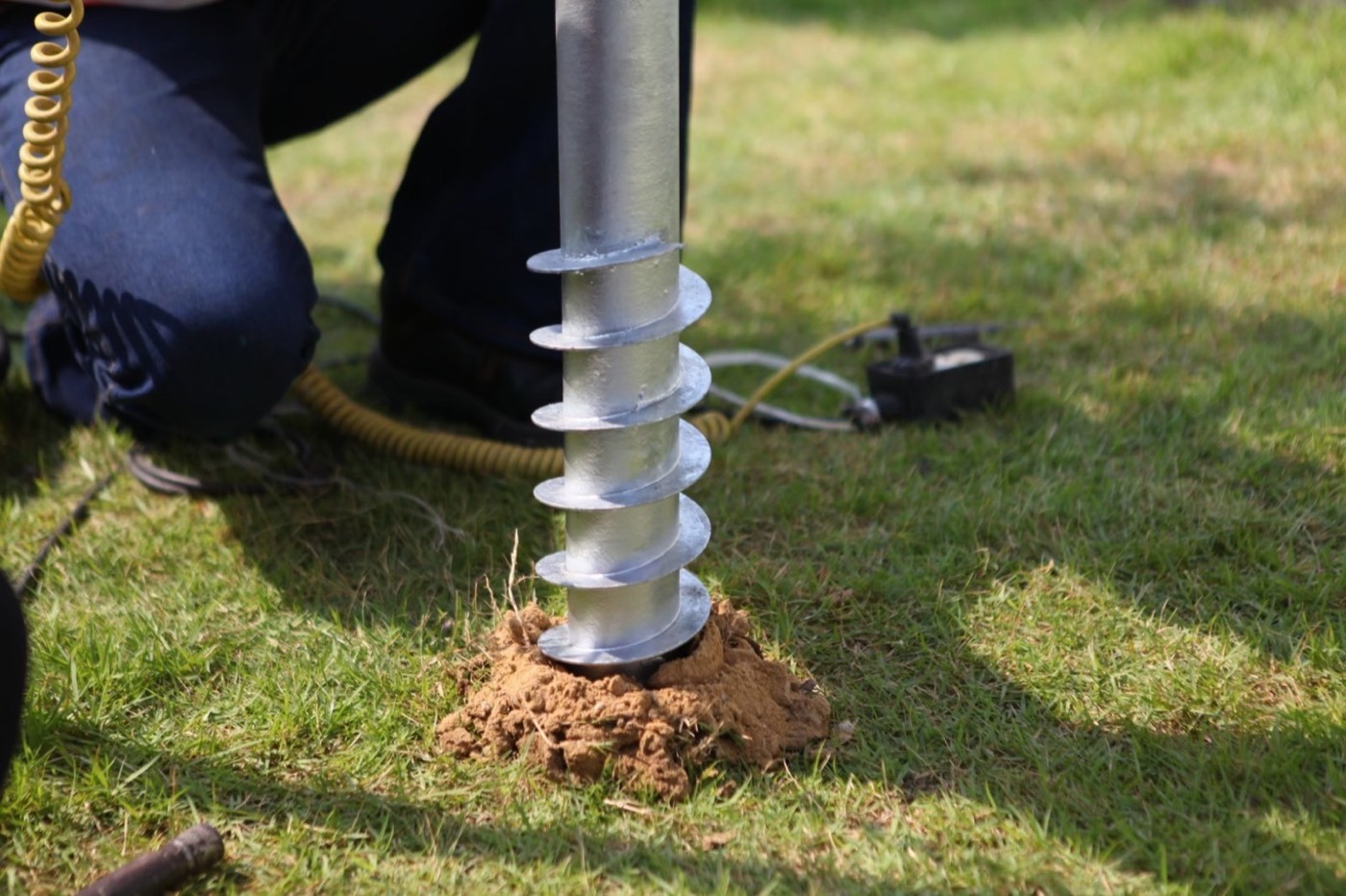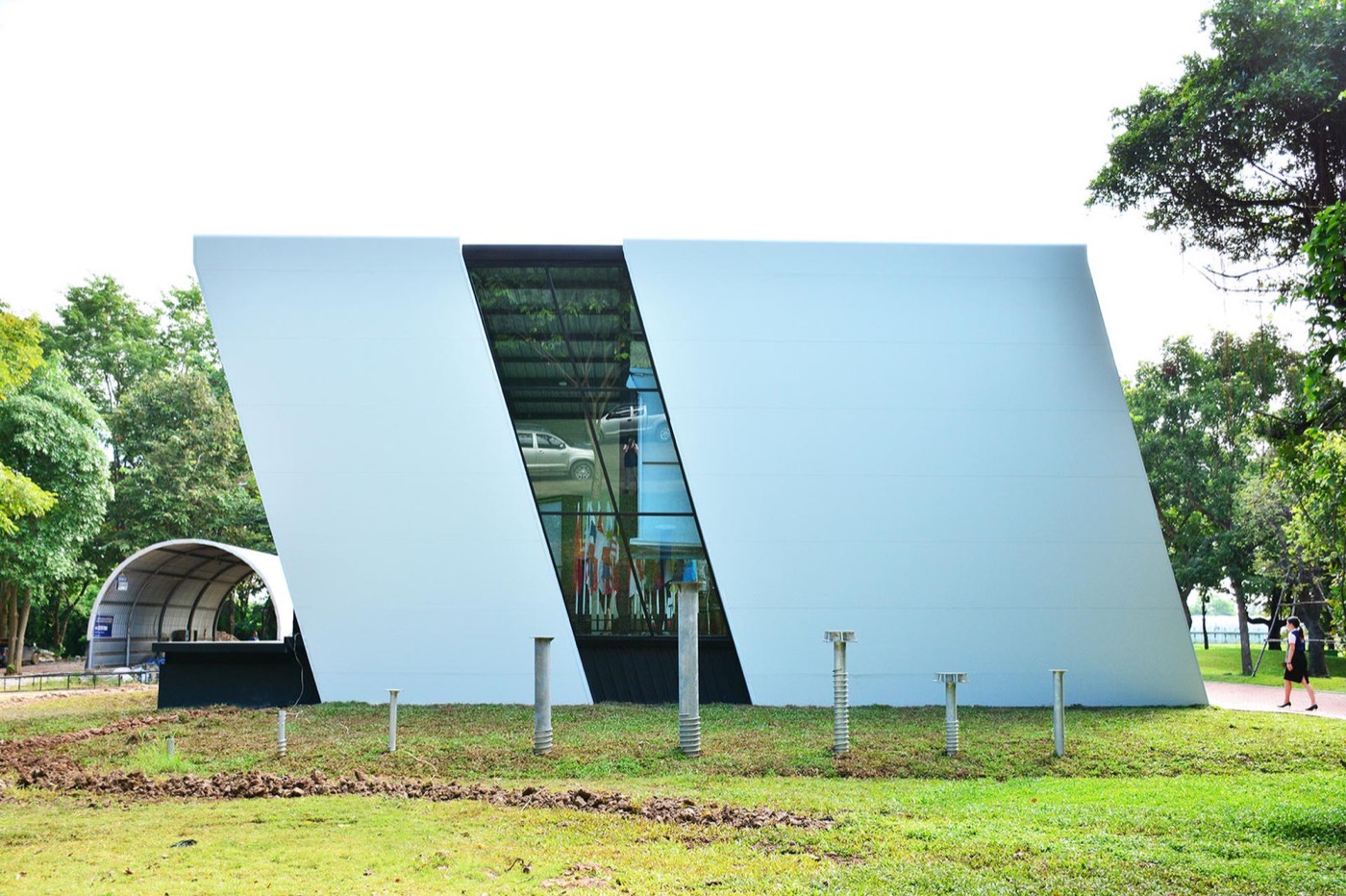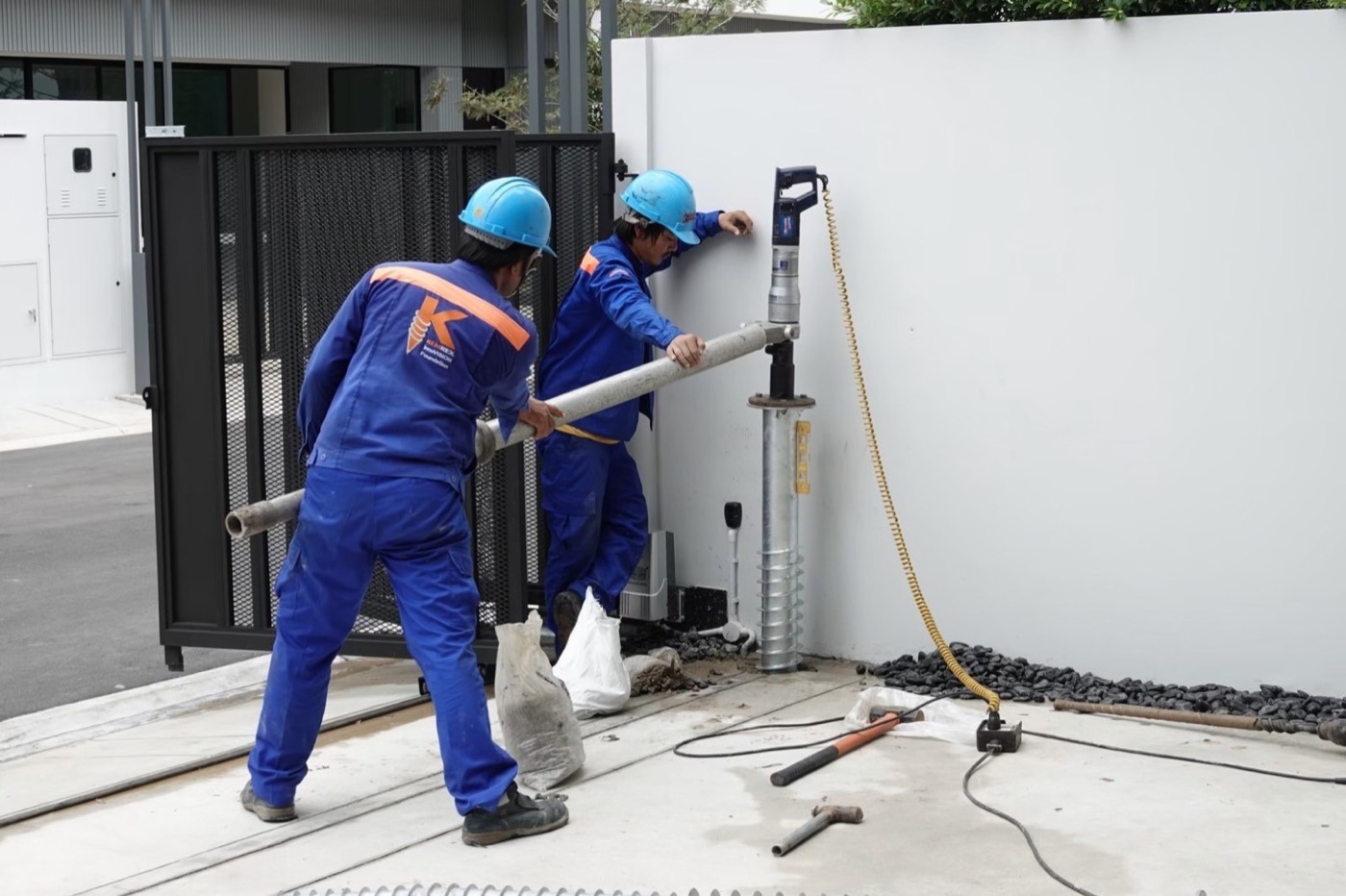
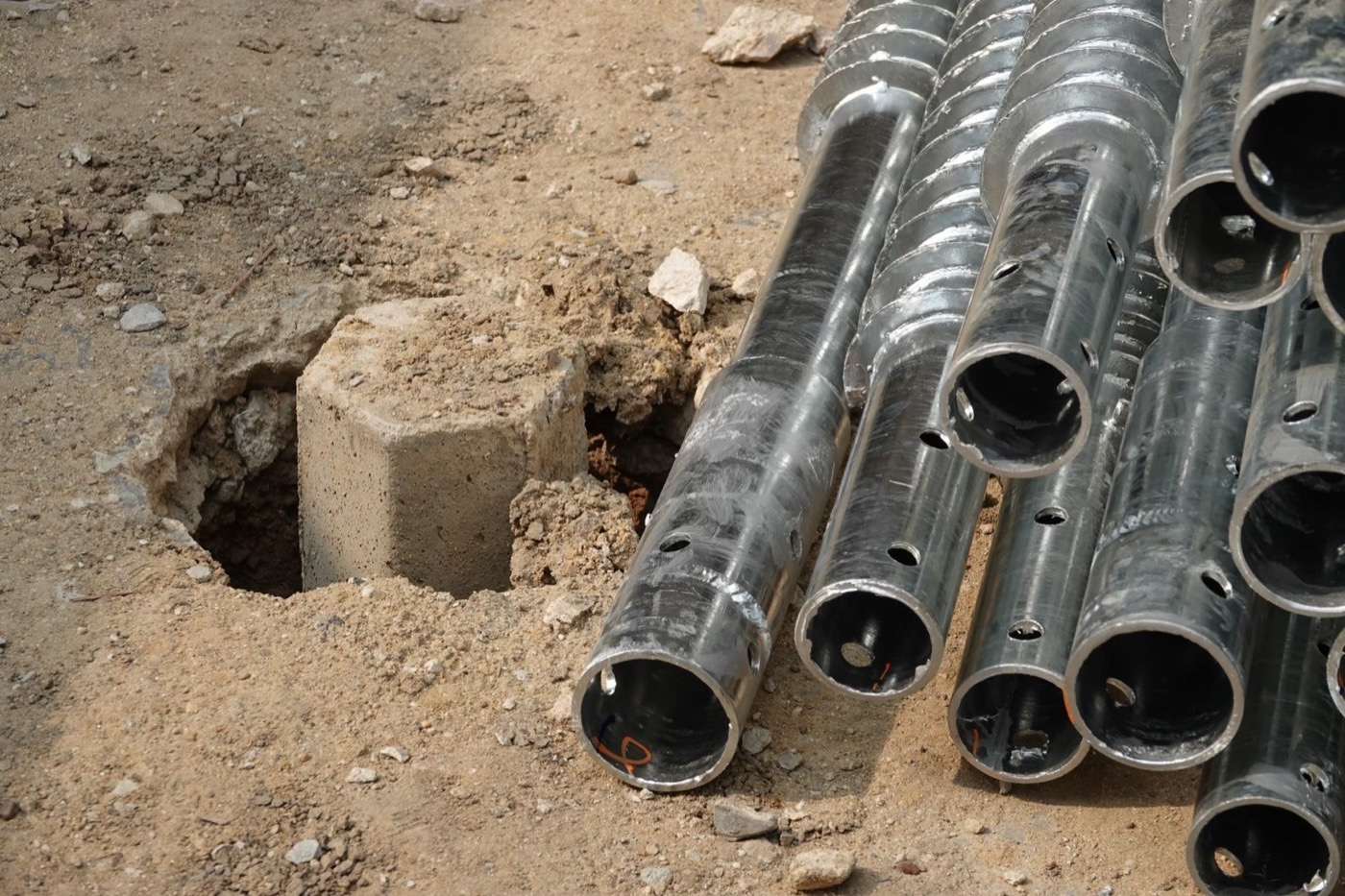
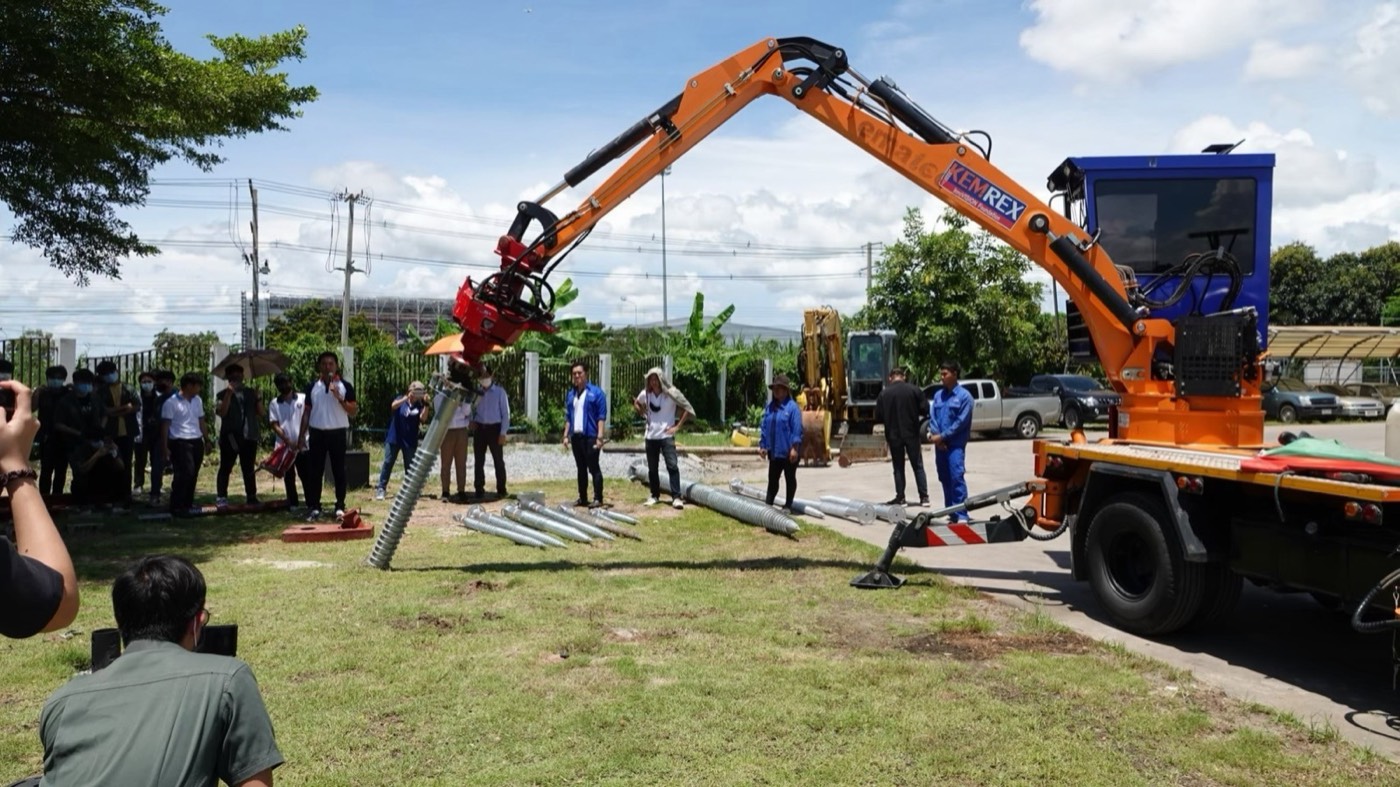
- Helical steel piles are screwed into the ground, so the structure can go up right away. There is no waiting for concrete.
- They reduce vibration and excavation, which suits sites next to neighboring houses or tight spaces.
- The main cost items for KEMREX are only the piles and transport. Concrete work adds formwork, labor and machinery.
- Which type fits depends on the load, the soil test results and the site. Let an engineer do the design.
Compared in one table
| Point | KEMREX helical steel piles | Concrete piles |
|---|---|---|
| How they go in | Screwed into the ground by hydraulic drive | Driven into the ground, or bored and filled with concrete in the hole |
| Building on top | Right after installation | Must wait for the concrete to set, step by step |
| Vibration | Reduced vibration, no impact on existing structures or neighboring houses | Driving causes vibration in the surrounding area |
| Soil and waste | Less excavation and less construction waste | Excavated soil, concrete debris and formwork |
| Tight spaces | Can get in (Hand Drive uses 2–3 people, KMO needs a safety zone of 2 m or more) | Depends on the size of the pile driver or boring rig |
| Removal | Can be removed and reused | Hard to remove |
Cost: look at every item
When comparing prices, many people only compare the price per pile. The real cost includes everything needed until the foundation is ready to carry the structure.
| KEMREX helical steel piles | Concrete piles |
|---|---|
| KEMREX piles | Concrete piles |
| Transport | Transport |
| — | Steel cutter |
| — | Concrete mixer |
| — | Formwork |
| — | Labor |
The actual price depends on the Series, the length and the site conditions. The fairest way to compare is to get quotes for both types based on the same drawings and the same site.
Time on site
KEMREX helical steel piles take about 15–20 min per pile with machine methods (Machine Drive, MDT, KMO) and about 30–45 min per pile with Hand Drive. Actual time depends on the area, site conditions and pile length. Once installation is done, the structure can go up straight away, which helps you finish the job sooner.
Environmental impact
KEMREX data states the following results from using 100 KEMREX piles:
- 5 tons less CO₂ emitted
- 80% less construction waste
- 5,000 liters less water used
- 50% less energy
In addition, the KEMREX W114x21000 has a product carbon footprint certification (TGO) of 713 kgCO₂e per pile.
Which one should you choose?
- Next to an existing or neighboring house: helical steel piles reduce vibration and do not affect the existing structure.
- Tight or hard-to-reach sites: helical steel piles have installation methods that use people or small vehicles.
- Jobs that need to finish fast: the structure can go up right after installation.
- Projects that are already designed: to change the pile type, an engineer must recalculate and redesign based on the soil test results.
Want to compare prices for your design?Send us your drawings or site photos. The KEMREX engineering team will assess them and send you a quote.
Chat on LINE @KEMREXFrequently asked questions
Are helical steel piles more expensive than concrete piles?
The price per pile depends on the Series, the length and the site conditions. Looking at total cost, the main items for KEMREX helical steel piles are only the piles and transport, while concrete pile work adds formwork, labor, a concrete mixer and a steel cutter. Ask for quotes based on the same drawings to compare.
Can helical steel piles be used for large buildings or factories?
Yes. Series D and W (including the DW sub-model) carry 15–100 tons, are 6–34 m long and reach the hard soil stratum. They are used for buildings, factories and power plants.
Can I switch from the concrete piles in my existing design to helical steel piles?
An engineer needs to recalculate and redesign based on the soil test results and the structural load. The KEMREX team provides soil testing, design calculations and installation in one place.